

Wedding planning advice / From behind the camera
11 wedding planning tips.
A day that feels like you.
How to plan a wedding you’ll actually enjoy
Start with the wedding you want to be at. Work out what matters to you both, what you can spend and roughly who’s coming. Then choose a date, time and place that work for you, and build the rest of the day around them.
Sounds simple when you put it like that, doesn’t it? Then someone asks about chair covers and the seating plan, and you start wondering whether you’ve bitten off more than you can chew.
I’m Dan, a wedding photographer based in Hull, covering the whole of the UK and further afield. I want you to have a wedding, not a photoshoot, and that shapes a lot of the advice I give my couples. These 11 wedding planning tips will help you keep the practical stuff manageable and leave room to enjoy the people you’ve invited.
You don’t need every idea in this guide. Take what helps, leave what doesn’t and keep coming back to the day you actually want.
01Make it your wedding, not the one you’ve seen online
Before you start collecting suppliers, have a conversation together. When you picture your wedding, what comes to mind first? Brilliant food? A live band? A DJ playing the songs you’ve been shouting in the car for years? Photos with your favourite people?
Some of my favourite weddings are the ones with proper personal touches. Gaming references, a favourite film worked into the day, something a bit geeky that makes complete sense to the couple. Those are the things I love noticing and photographing.
You don’t need to spend thousands on styling and suppliers because you feel that’s what a wedding is supposed to look like. If you love the flowers, the outfits or a brilliantly styled room, go for it. Just make those choices because they get you excited, rather than because everyone online seems to be doing them.
Each choose a few things you’d be disappointed to lose, then talk about the bits you aren’t bothered about. Favours? A big entrance? Cutting a cake neither of you particularly wants? You’re allowed to leave them out.
At the end of the day, it’s your wedding. You can look after your guests without planning the whole thing around everybody else’s expectations. Take inspiration, ignore the pressure and make it yours. No trend gets the final say.
For a proper example, have a look at Louise and Tessa’s Back to the Future wedding at Clapham Holme Farm. They had a DeLorean, hoverboards and guests embracing a past, present and future dress code. The film references gave everyone something to get involved with. You don’t need a whole theme, but if there’s something you both love, why leave it out?
Before another idea goes on the list
Love it, or feel you ought to?

02Plan your wedding guest list around your people
Picture the people you’d be excited to see after the ceremony. The ones you want to hug, eat with, laugh with and find on the dance floor later. Start with them.
You don’t have to invite someone just because they invited you to theirs, because you work together or because you feel you ought to. A long guest list isn’t a measure of how good your wedding will be.
Family expectations can make this a bit more complicated, so talk it through together before promising invitations. If other people are contributing money, have the guest-list conversation early. Agree what you’re both comfortable with and explain it kindly, rather than leaving one of you to handle every awkward conversation.
Big wedding or small wedding, the point is the same: have the people you want around you. You’re planning a celebration, not returning a pile of social favours.
A guest list with your people at the centre
Start with excitement. Talk through the pressure.
“We’d love them there.”
Start your list here, then check your space and budget.
“We feel we should.”
Ask where that expectation comes from. Discuss it together before saying yes.
“We’re not sure.”
Give yourselves time. You don’t have to promise an invitation on the spot.
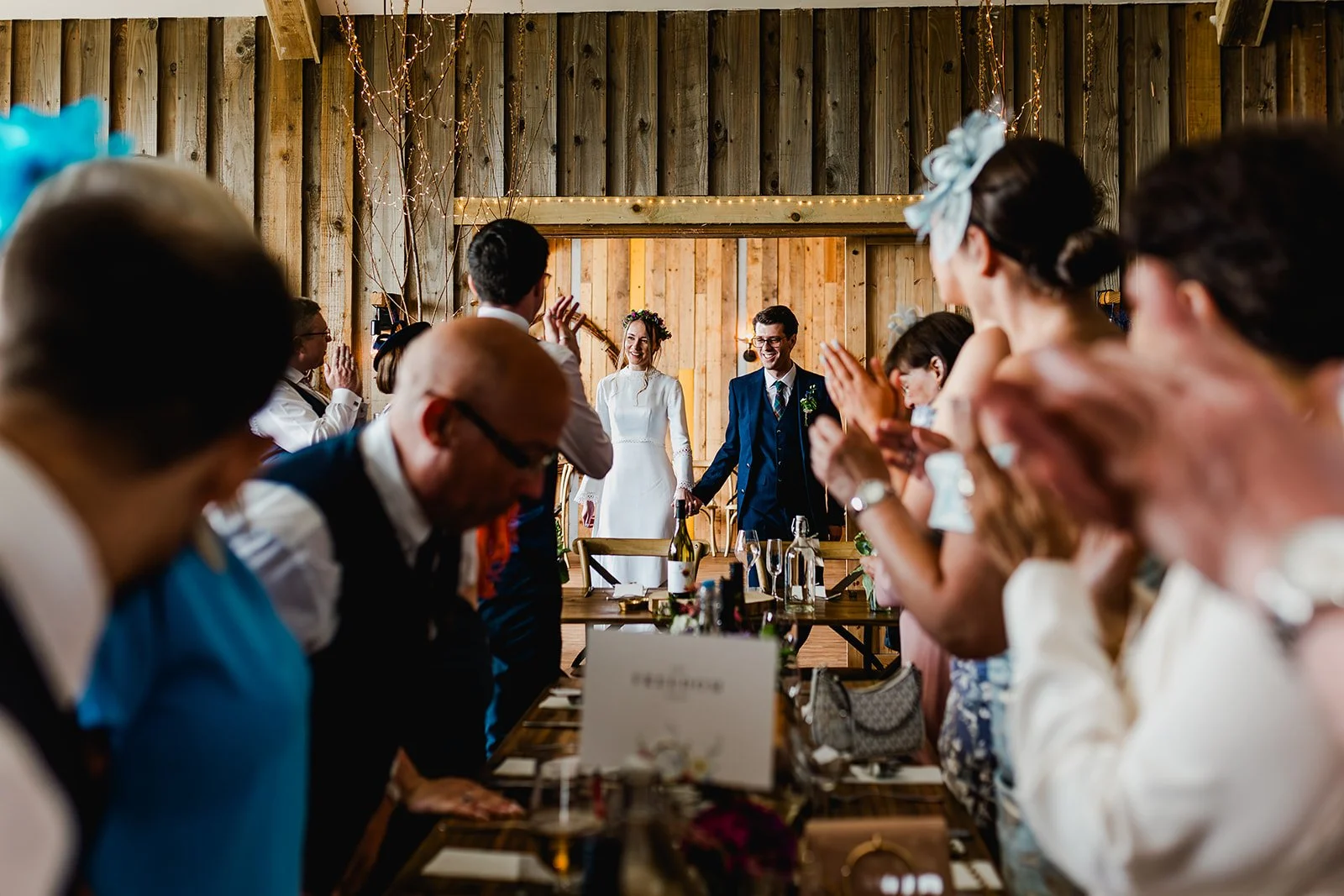
03Set your wedding budget around what matters to you
You don’t need a final seating plan before you’ve found a venue. A rough guest number does help, though. It affects the size of the space, food, drinks and how far your money needs to stretch.
Agree a wedding budget you can afford and want to stick to. Weddings can easily end up costing more than you first expected, so get quotes, look at average prices as a starting point and ask recently married friends what they paid for their suppliers. That’ll help you get a feel for pricing, but compare what’s included too: dates, locations and the amount of work involved can make a difference.
Check any minimum spend, travel, setup, equipment and clear-up costs. Keep a little room within your budget for things you haven’t spotted yet, rather than allocating every last pound on day one.
A simple shared list is enough: supplier, total cost, what’s included, amount paid and next payment date. You’ll be grateful for one place to look when someone asks a question. Don’t let a spreadsheet persuade you to book something you never wanted in the first place.
Once you have a workable budget and dates in mind, check the availability of the venue and any supplier you’d be gutted to miss. There’s no single booking deadline for every wedding, but it’s worth asking before you build the rest of the day around them.
At Amy and Callum’s wedding at Social in Hull, Amy created the signage and stationery, music ran through the day and the evening food was a chippy tea. Bloody brilliant. That isn’t a claim about what their wedding cost; it’s a reminder that your spending choices can reflect what you actually enjoy. A traditional menu or another styling extra isn’t compulsory.
What to decide first
Where to start with your wedding plans.
Decide what matters to you.
Agree a budget you can afford and want to stick to, roughly how many people you’d like there and a few possible dates. Put the things you care about most at the top of your list.
Find your date, time and place.
Check your venue and ceremony availability together. If you’ve got your heart set on a particular photographer, band or other supplier, ask about your date before you commit.
Book the things you actually want.
Get quotes, compare what’s included and keep track of what you’re spending. Plan the food, music, photos and little extras around your priorities. You don’t have to have everything.

04Choose a wedding venue that works for your guests
The room might look bloody lovely in photographs. Now imagine arriving there in your wedding clothes, with a drink in one hand and no idea where you’re going.
Where does everyone wait before the ceremony? How do they get to the next part? Is there somewhere to sit, somewhere quieter to chat and a comfortable indoor option if it rains? Talk through any access needs, parking and transport early.
Ask who sets up, who moves furniture and what happens if the same room is needed twice. Check the venue’s arrangements for food, music, power and finishing times against your ideas. A relaxed-looking wedding can still involve quite a bit of organising behind the scenes.
If photographs are important to you, have a look at real weddings photographed at the venue, ideally at a similar time of year to yours. Lighting is something couples can easily overlook when viewing a place. If you love bright, natural-light photos, does the venue have plenty of windows? What’s the light like in the rooms where you’ll get ready, have your ceremony and eat?
Ask where the sun rises and sets in relation to the venue, and where the light falls around your ceremony time. The season makes a difference, and buildings or trees can block the evening sun before sunset. If you can, visit around the time you’ll be using the space and chat to your photographer about the options. A darker venue can make brilliant photographs too; just make sure you like how your photographer captures that kind of setting.
My wedding venues directory lets you explore places I’ve photographed. If you’re after a day with your own stamp on it, have a look at these alternative wedding venue ideas in Yorkshire too.

05Choose wedding suppliers you get along with
Tell suppliers what you want the experience to feel like, as well as what you want it to look like. A brilliant portfolio or playlist is a starting point. The conversation afterwards tells you more about how someone will work with your plans.
I always make time for a phone or video call with my couples before they decide to book me. It’s a chance to have a chat, tell me what you’re planning and see how we get on. Ask me questions too. You should feel comfortable with the person who’s going to be there with you.
That matters with most suppliers, but especially the ones spending the whole day around you and your favourite people. Do you get along? Have you got a similar vision for the day? Does their approach feel like a good match for you?
Think of it a bit like Tinder. If we both swipe right, we’re good to go. You want someone whose photographs you love and whose company you’ll actually enjoy.
For photography, ask to see a complete wedding gallery, including the ceremony, guests and evening. Talk about how portraits and group photos fit into the day. Ask what time coverage starts and finishes. Ask how they work on the day too. Do they get involved, chat to your guests and join in, or mostly hang back and capture things from a distance? Think about which approach would feel right for you.
Read the contract and terms before booking, and ask about anything you don’t understand. If you’d like to get a feel for my approach, have a look through my wedding photographs and the coverage I offer.

06Leave breathing room in your wedding timeline
Look at the gap between your ceremony and food. Now put everything you’re hoping to do into it: confetti, congratulations, drinks, groups, couple photos and moving everyone around. That lovely long gap can suddenly look quite small.
I usually recommend six to eight group shots, or none if you don’t want them. Allow roughly three to five minutes per group when planning. I can often get through them quickly; finding the person who’s wandered off is the bit that’s harder to predict.
Doing groups just after confetti can help, while everyone’s together and still sober. One or two guests who know people are brilliant for gathering the next group. Keep the list focused on the combinations that matter to you.
The graphic below shows how a longer list can eat into a reception. It’s an example, not a timetable you have to follow.
Where does the time go?
More group shots.
Less time at the bar?
Drag the sliders and see how the photo list fits into an example 90-minute reception.
48 minutes remaining for confetti, congratulations, drinks and catching up.
With 3–5 minutes per group, that could be 40–56 minutes remaining.
This gives you a rough idea of how much time your photo list might take. It allows 4 minutes per group, including getting everyone together, plus the time you’ve chosen for couple photos. Some groups will be quicker; others might involve finding someone at the bar. Leave room for confetti, hugs, getting from place to place and actually enjoying a drink with your guests too.
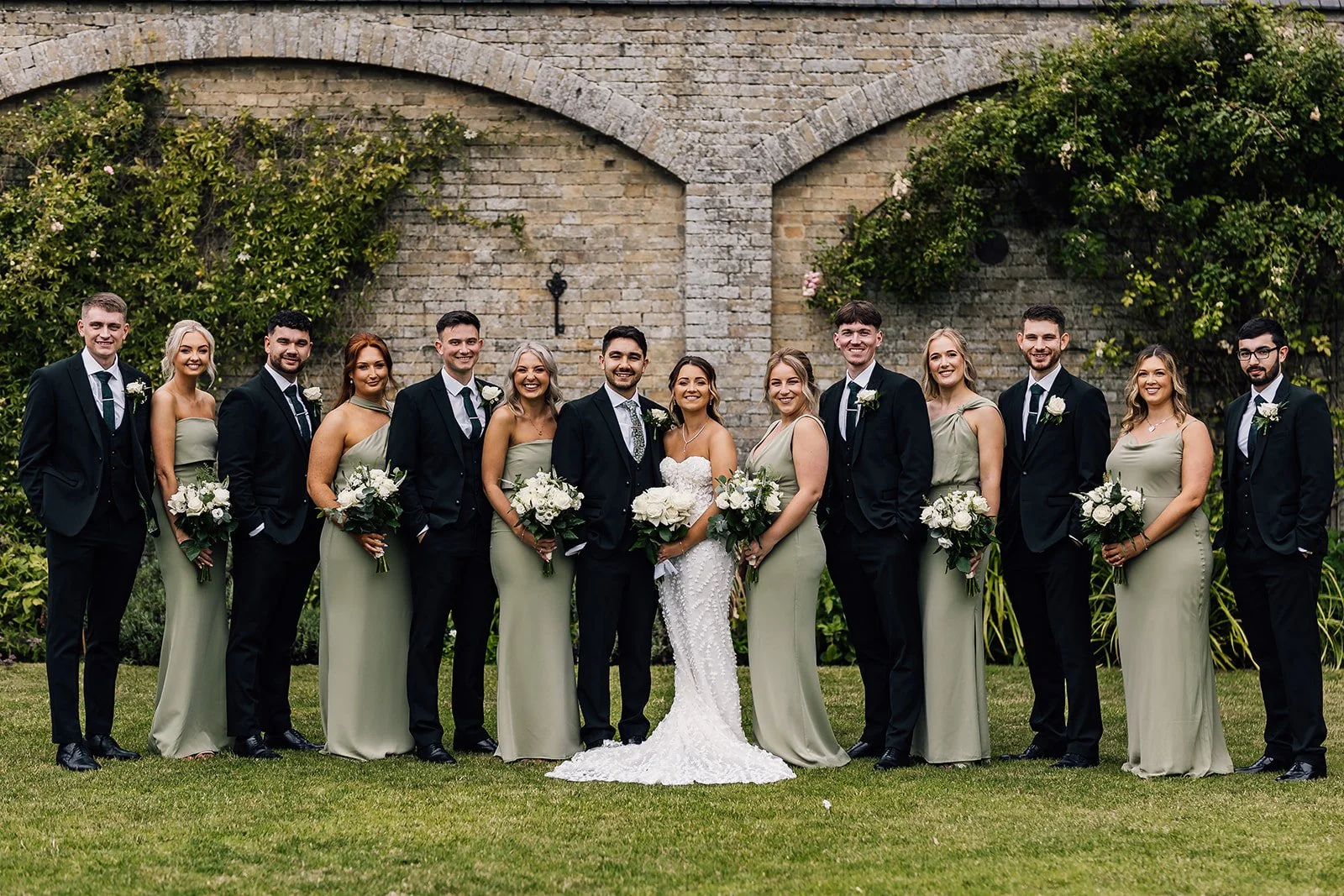
07Make room for photographs without disappearing for ages
Tell your photographer what you want to spend time doing. If catching up with guests is high on the list, say so. You shouldn’t have to choose between enjoying your wedding and having photographs that remind you how it felt.
You don’t need to keep checking where my camera is or put on a smile every time I walk past. Chat, laugh, hug your mates and get stuck in. I’ll photograph what’s happening and give you a bit of help when we do portraits or groups. If having your photo taken makes you nervous, tell me beforehand so we can work out what helps.
For couple photos, I usually suggest a little wander of around five to ten minutes. We can work around the day and the light rather than treating it like a separate appointment you have to perform at. Sometimes a short second wander makes sense; sometimes you’ll want to get straight back to the party.
I always work around my couples. If having more photos of the two of you is a priority, we’ll work together to make time for that. I’ve also had couples ask for no formal couple photos at all, just candid moments throughout the day, and that’s absolutely fine too. Five to ten minutes is a suggestion, not a rule.
You know what matters to you in your photographs and how you want to spend your wedding day. Choose suppliers who are on board with that vision and happy to work with you. They can offer advice and explain what’s practical, but you shouldn’t feel pushed into doing things just because that’s how they normally do them. It’s your wedding, after all, not theirs.
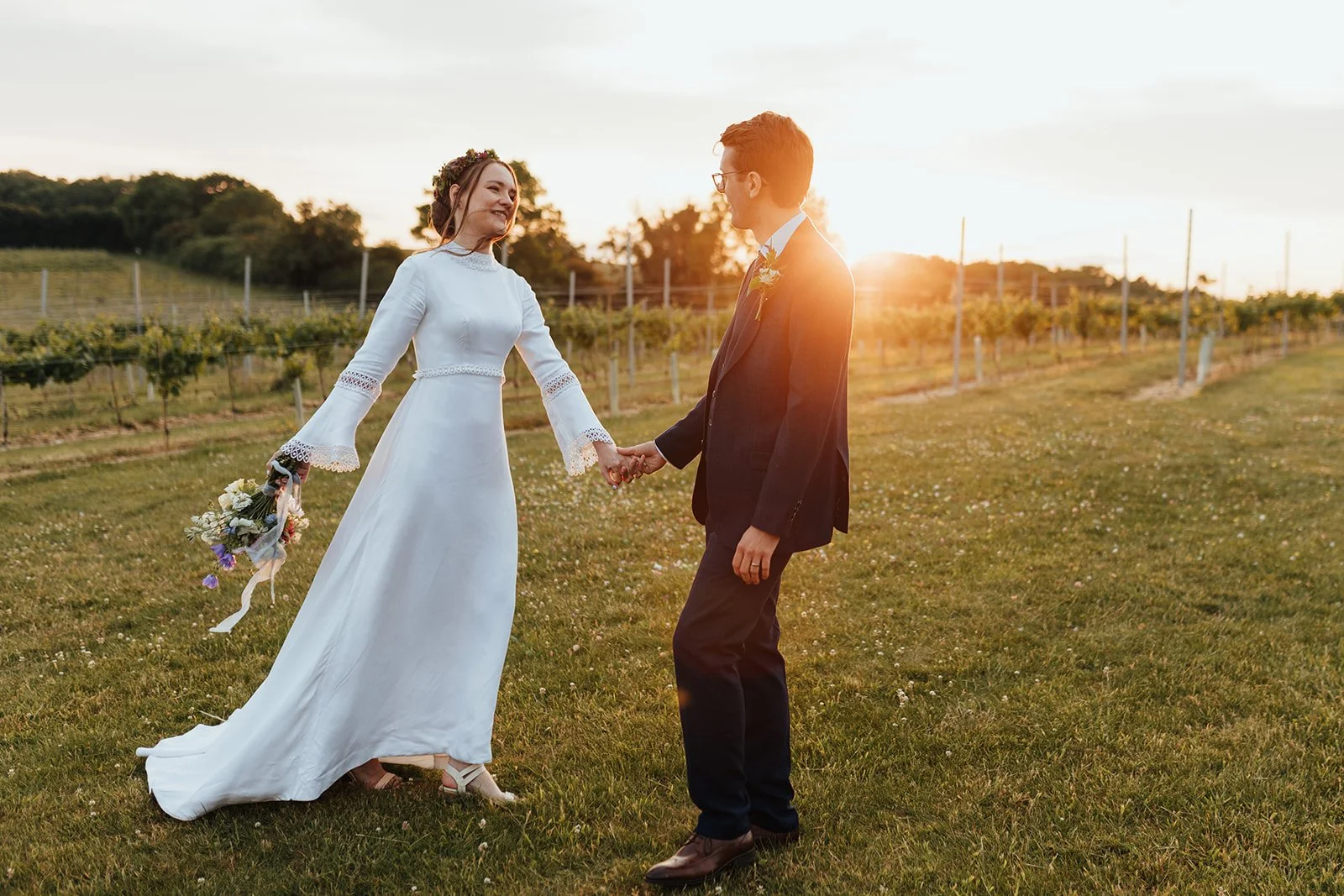
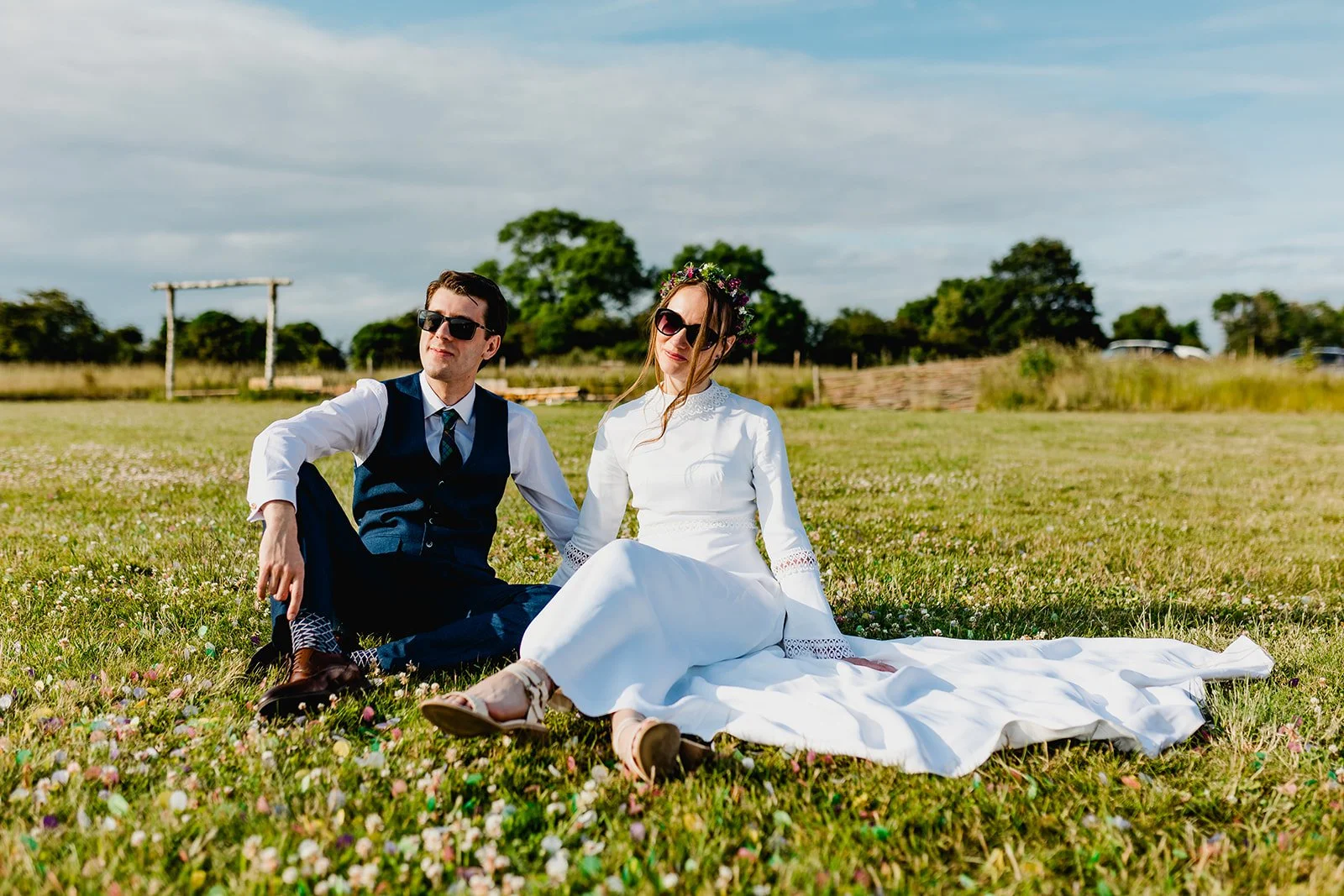
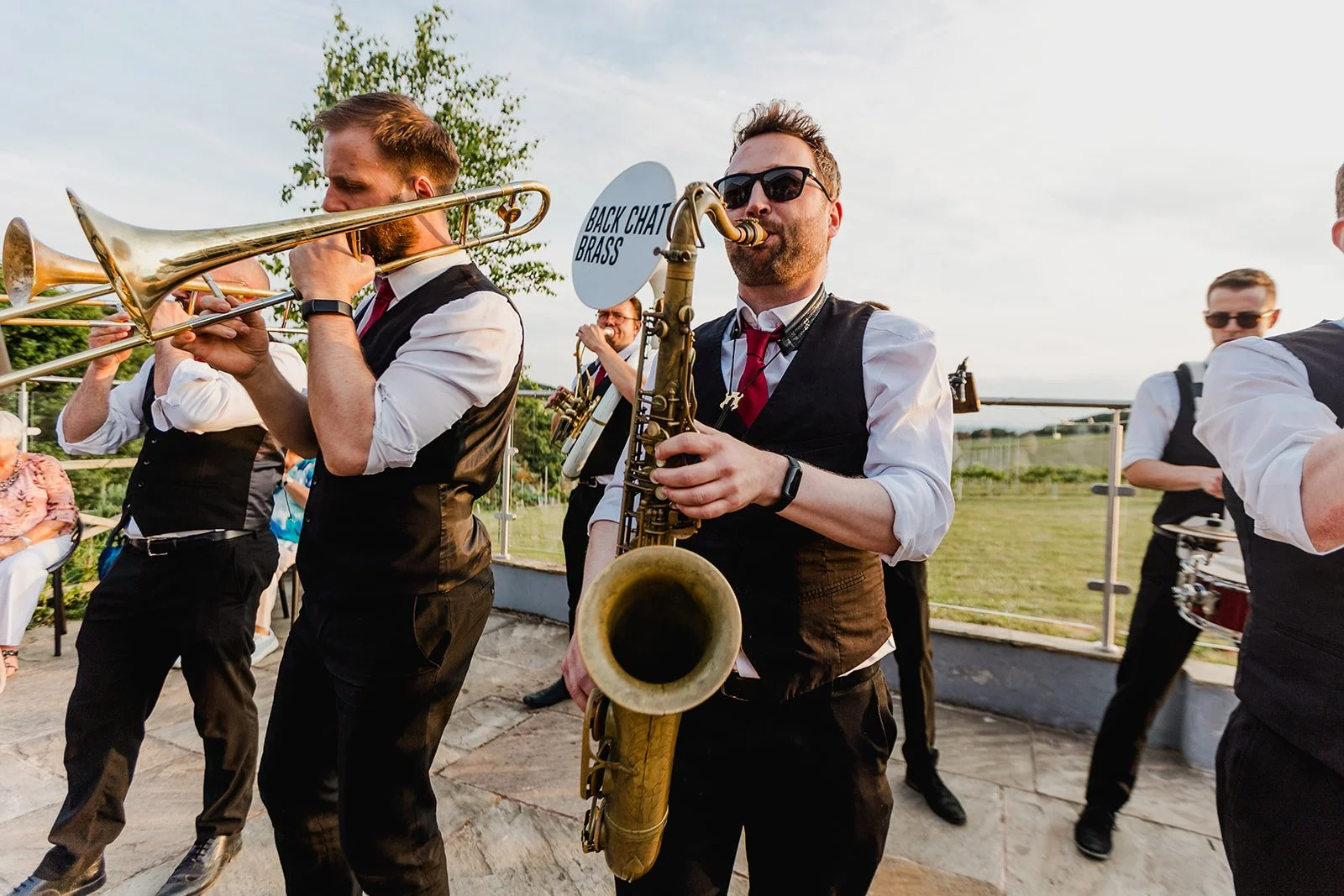
Winter daylight and summer evenings give you different options, so work out the useful windows with your photographer before finalising timings. At Alex and Louise’s Little Wold Vineyard wedding, we photographed them laughing together in their sunglasses earlier on, then had another wander through the vines when the evening light arrived. Their day also had a surprise brass band and a terrace party. Keep some flexibility for the light, rather than planning one long photo session that takes you away from everything else.
08Make a wet-weather plan for your wedding
You can’t pay for good weather. Unfortunately, wherever in the world you book your wedding, there’s no guarantee the weather will play along. Pick somewhere you’ll enjoy whatever the forecast says, and find out what the backup plan looks like before you book.
Does the venue have an indoor option if it rains? Is there enough room for your ceremony, drinks and group photos? Ask who decides when to move things inside and how it all works, so you’re not trying to figure it out on the morning.
Have a chat about the photos too. Are you happy heading outside for a few pictures in the rain, or would you rather stay dry? Have you got umbrellas, or does the venue provide them? A spare pair of shoes can be handy if the ground gets muddy. If you fancy a little wander with umbrellas, brilliant. If you don’t, we’ll work with the indoor spaces instead. You don’t need to get soaked to have lovely wedding photos.
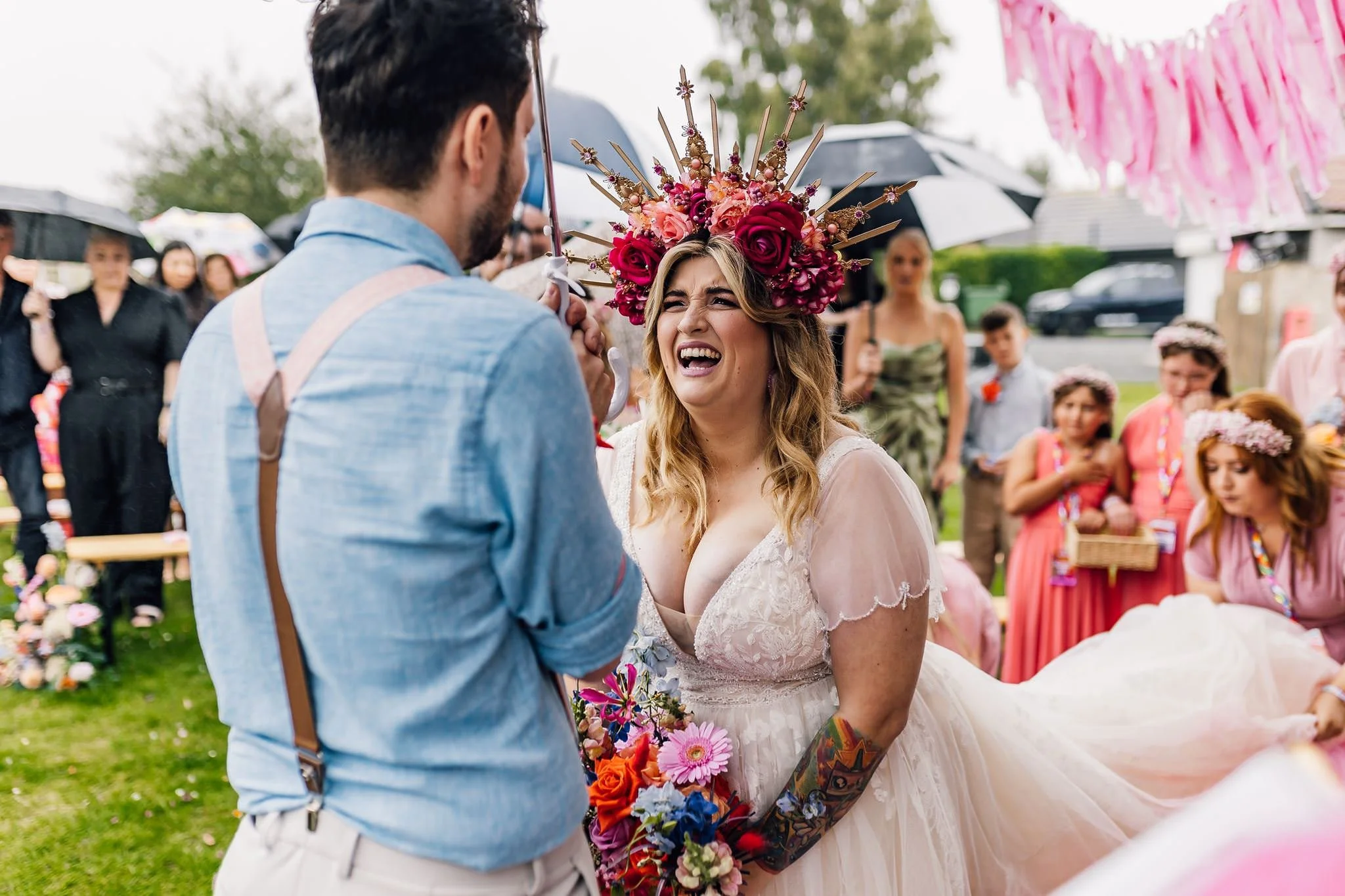
Share that plan with your suppliers, then let them help you use what’s available. At Charlotte and Rory’s Scrivelsby wedding, rain before the ceremony gave way to garden games and evening sunshine. You might get a break in the rain, or you might not. Having a plan means you can get on with enjoying yourselves either way.

09Find out who’s setting up, helping out and packing away
Before you start handing jobs to your mates, ask what your venue will actually help with. Will they put out your place names, set up the table plan and arrange your decorations, or is that down to you? Some venues let you set up the day before. Others let you drop everything off and their team sorts it on the day. Check what’s included, what costs extra and when you can get in.
Think about the little things too. Who takes deliveries while you’re getting ready? Who moves flowers or signs after the ceremony? Where do the cards and presents go, and who takes them home? When do your decorations and hired items need collecting? These are the bits you might not think about until someone asks you halfway through your wedding breakfast.
If the venue is setting things up, label your boxes and leave a simple list or a photo showing where things go. If you’re doing it yourselves, make sure you’ve got enough time and a few people who’ve agreed to help. Give each job to someone who knows what’s needed, rather than hoping someone will spot it.
A venue coordinator, planner or willing friend can help you keep things moving. Just keep the jobs manageable. Asking a mate to meet a delivery is one thing; asking them to run the whole wedding means they don’t get much chance to enjoy it with you.
The little things to check
Who’s doing what, and when?
What will the venue do?
Ask about decorations, place names, deliveries and moving things between rooms. Confirm what’s included and what you’ll need to organise yourselves.
When can you set up?
Can you get in the day before, or drop things off for the team to set out? Agree access times, storage and who needs to be there.
Who’s packing it away?
Check the collection deadline and arrange help with decorations, hired items, cards and presents. Nobody wants a surprise clear-up job at midnight.
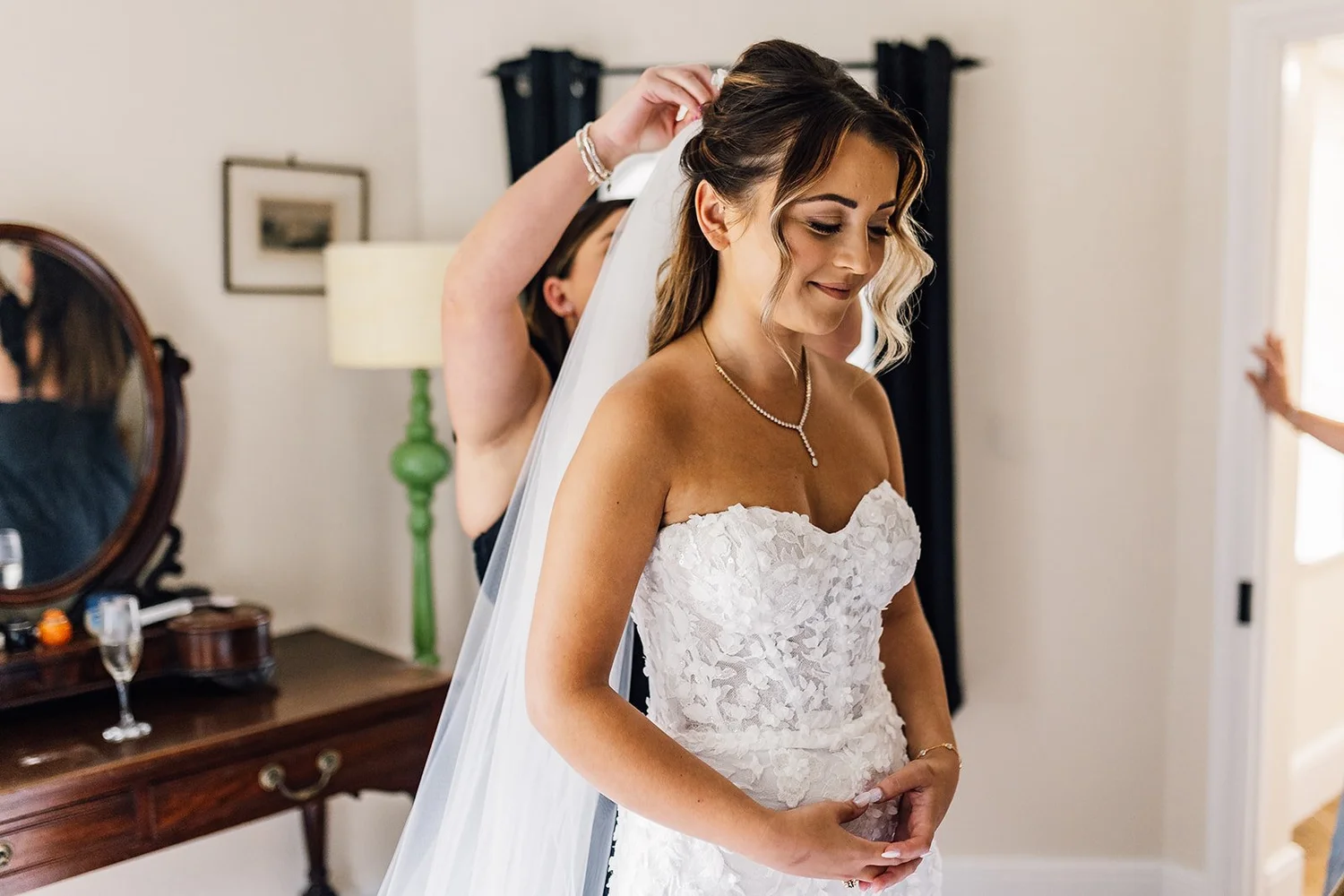
10Eat in the morning. Nobody needs an empty stomach.
Make sure you eat in the morning. Weddings are long days, and there can be a big gap between getting ready and sitting down for your meal. Nobody wants to run on an empty stomach, especially when the fizz has already come out.
Plan breakfast into the morning rather than hoping you’ll grab something between hair, makeup and getting dressed. It doesn’t need to be anything fancy. Have something you enjoy, keep a few easy snacks nearby and make sure there’s water to hand. If you’re getting ready somewhere without food available, sort out who’s bringing it before the day.
Have a look at the gap between breakfast and the wedding meal too. A later ceremony, travel between venues or speeches before dinner can mean you’re waiting longer than you think. Ask your venue or caterer when food will actually be served, and whether you need something in between. Think about your guests as well. Hungry people don’t become less hungry because the flowers look amazing.
And don’t miss your own canapés because you’re busy saying hello to everyone. Ask someone to bring a plate over, have a drink of water and give yourselves a minute to eat. When the main meal arrives, enjoy it. You’ve spent time choosing the food; you’re allowed to sit down and taste it without feeling you need to visit every table at once.
Keep yourselves fed, not just your guests
Three moments worth planning for.
Before getting dressed
Have breakfast. Make space for it in the morning, rather than hoping you’ll remember.
While you’re getting ready
Keep water and easy food to hand, especially if the wedding meal is a long way off.
Between venues and meals
Check the gaps. Ask your caterer or venue about food if there’s a long wait.

11Find a few minutes together, then enjoy the day
You can spend a surprising amount of your wedding day having separate conversations. You’re both surrounded by people you love, someone wants a catch-up and suddenly you haven’t properly spoken to each other since the ceremony. Find a few minutes to be together and take it all in.
That might be a quiet drink after the ceremony, a little walk after dinner or sitting together watching your mates make questionable dance-floor decisions. It doesn’t need to be another thing on a timetable. Just check in with each other and make room for a moment where nobody needs anything from you.
A short wander for photos can give you that breathing space, but you can also have a few minutes with no camera around at all. Tell me if that’s what you’d prefer. I want you to enjoy being together, and you don’t need every moment of the day photographed for it to matter.
Some things might run late. Someone might forget something. If there’s a problem, let the person you’ve asked to help deal with it where they can. You don’t need to spend the whole day checking the decorations, watching the clock or wondering whether everyone else is having enough fun.
Get on the dance floor if that’s your thing. Sit and chat if it isn’t. Eat the evening food, hug your favourite people and enjoy the day you’ve put together. There are plenty of good photographs in the bits you couldn’t have scheduled. You’ve done the planning; give yourselves permission to be part of the wedding now.
Different days. Plenty to enjoy.
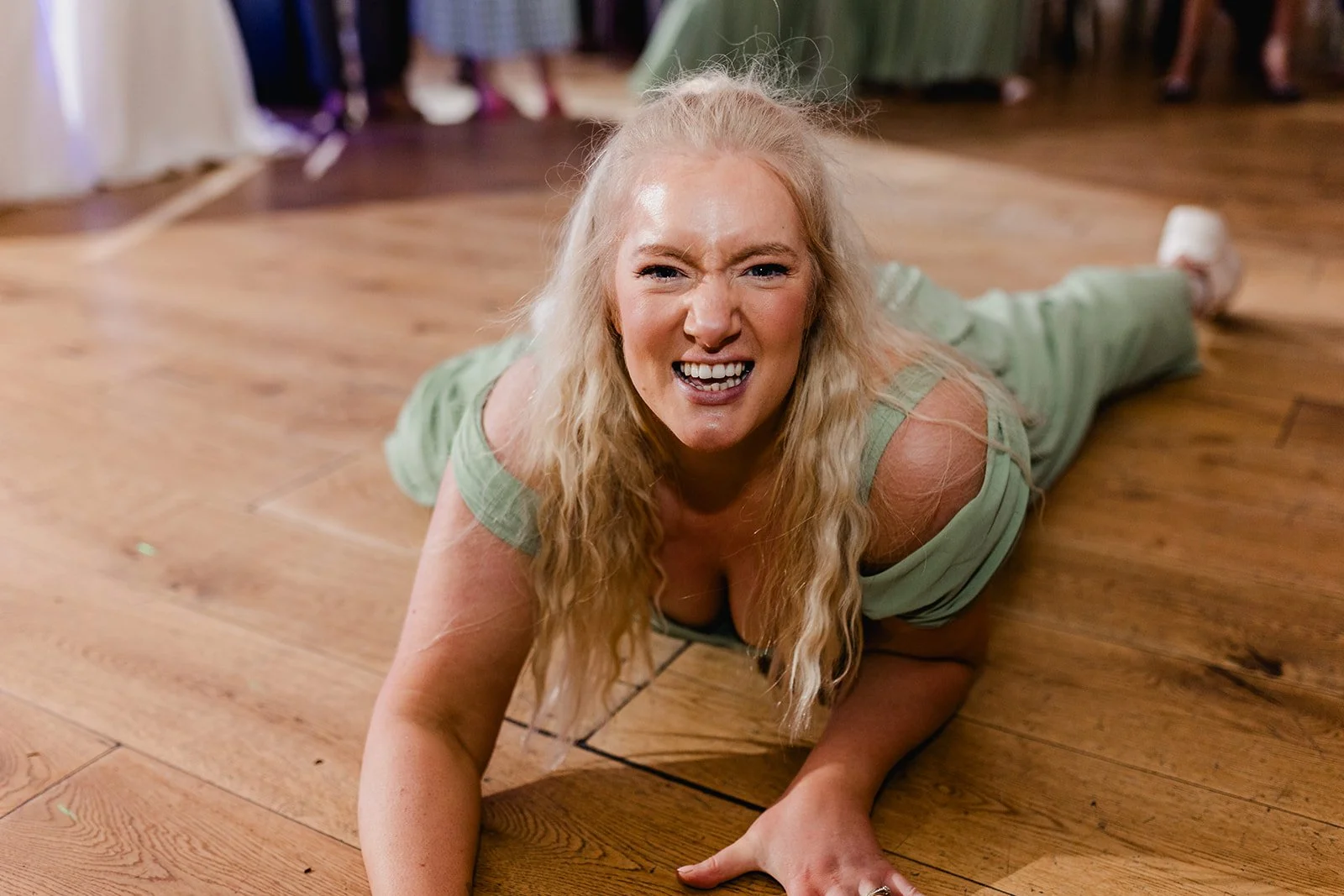
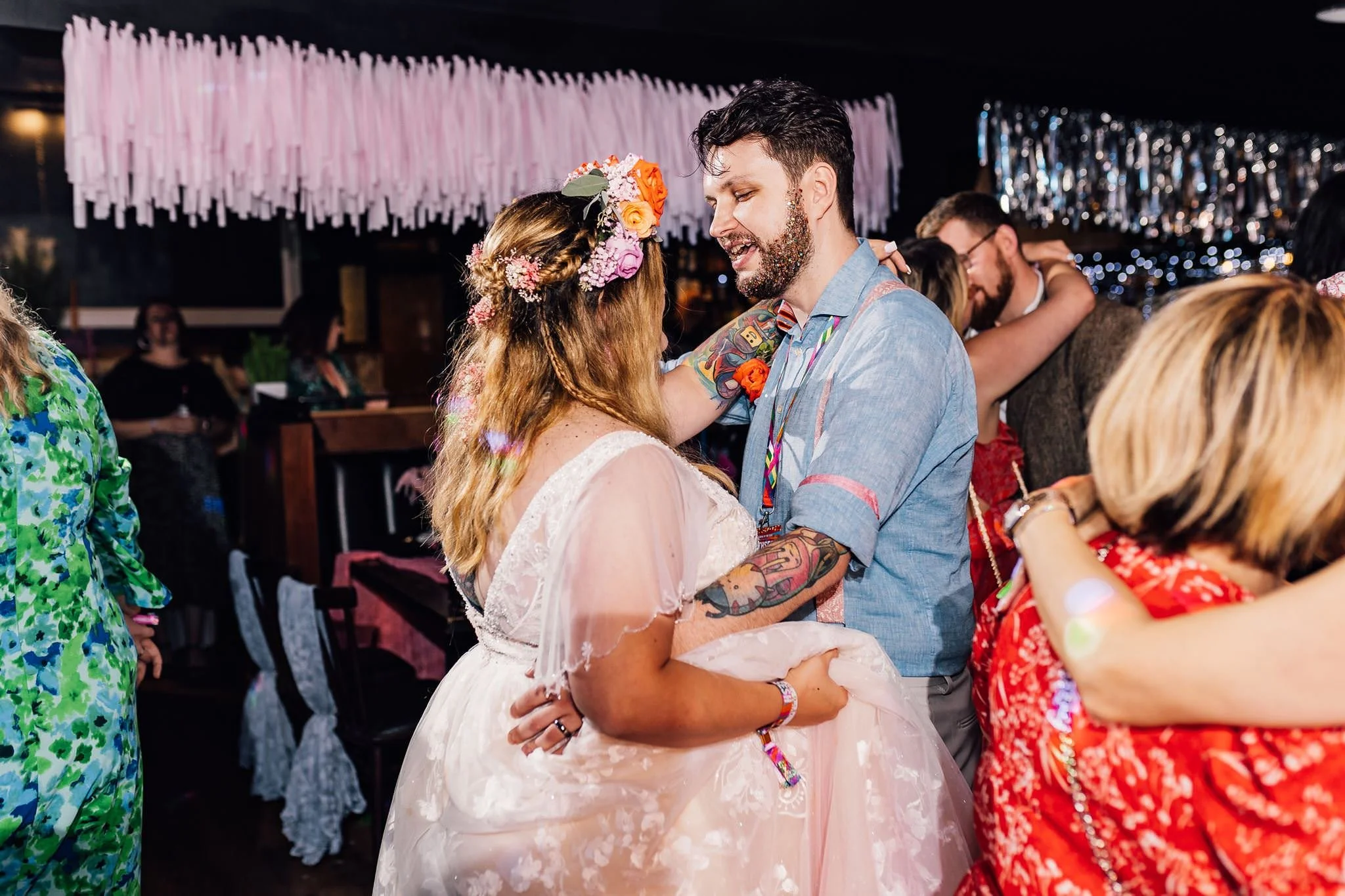
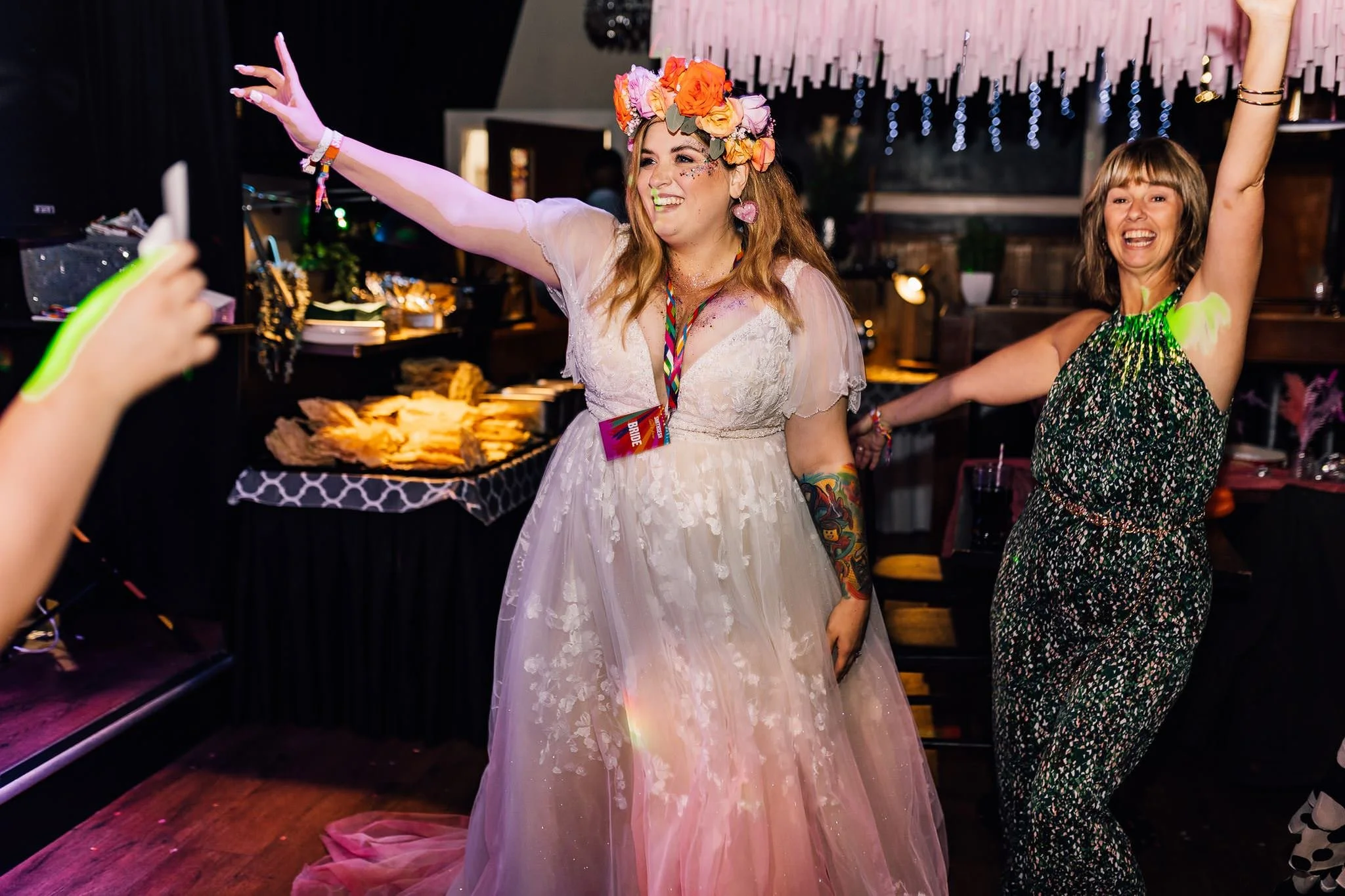
These are real weddings, with music, games, colourful details and people getting stuck in. There’s no single look you need to aim for. Amy and Callum made Social their own, while Chloe and Aaron went for a festival wedding at Pitch 21. Think about which moments you’d want more time for at yours.




A few wedding planning questions
Do we need a wedding planner?
Personally, if your venue has a team handling the running of the day, I’d rather put that money towards something else you’re excited about. A good venue team can do a lot to keep things running smoothly, so ask what coordination is included before paying for extra help.
I do plenty on the day to help things along too. Organising everyone for confetti, helping gather people for group photos and getting through the list without it taking over your drinks reception are all part of what I do. I want you enjoying your wedding, not worrying about who needs to be where.
That doesn’t mean I’m taking on the job of a wedding planner, or that every venue provides the same support. If you’re organising a DIY wedding, hiring an empty space or juggling lots of separate suppliers, a planner or on-the-day coordinator could be really useful. Find out who’s handling setup, suppliers and timings, then decide whether you actually need that extra pair of hands.
How early should we book wedding suppliers?
I usually get booked 12–24 months in advance, so if you’ve got your eye on a particular photographer or supplier, I’d always say the earlier the better. Enquire once you have a date in mind rather than assuming they’ll still be free later.
Have a chat, make sure you’re a good match and check the contract and terms. Then, when you’re ready and can comfortably afford it, pop the deposit down to secure your booking. Check what that supplier needs to confirm your date, and make sure your venue and ceremony plans line up before committing.
Planning with less notice? Still ask. Availability varies, and there may be a date free that works perfectly for you.
Do we have to follow a traditional wedding timeline?
You can make plenty of choices about the order and feel of your day. Confirm the ceremony arrangements and the practical limits with your venue and suppliers, then build around those. Don’t include a tradition purely because you think everyone expects it.
What should we send our photographer before the wedding?
Your timings and locations, any important people or moments, your group list if you want one and anything that would help you feel comfortable. Flag surprises and late-evening plans too. You don’t need to direct every photograph; useful context helps me notice what matters to you.
A wedding you get to be part of.
If that sounds like your kind of day, have a look through my wedding photographs and prices and coverage. Then tell me your date, where you’re planning it and what you’re most looking forward to.
LET’S HAVE A CHAT